
"So what do you do all day?"
It is an innocent question. People ask it at gatherings, across kitchen tables, in the small talk of ordinary life. And most of us, hearing it, discover something strange: we cannot answer it. Not honestly. The true answer would take an hour, and it would still leave things out.
So we give the short version. Work. The kids. The house. A sentence or two that sounds like a life and is not wrong, exactly — it just leaves out most of what we actually carry.
That gap matters. Not because small talk deserves a full accounting, but because the short version is usually the version we carry in our own heads, too. We describe our lives to ourselves the same way we describe them to other people: in a sentence that fits. And a load that has never been fully seen cannot be fully understood. Overwhelm is a math problem, a mismatch between a load and the capacity carrying it. But you cannot do honest math with numbers you have never actually counted.
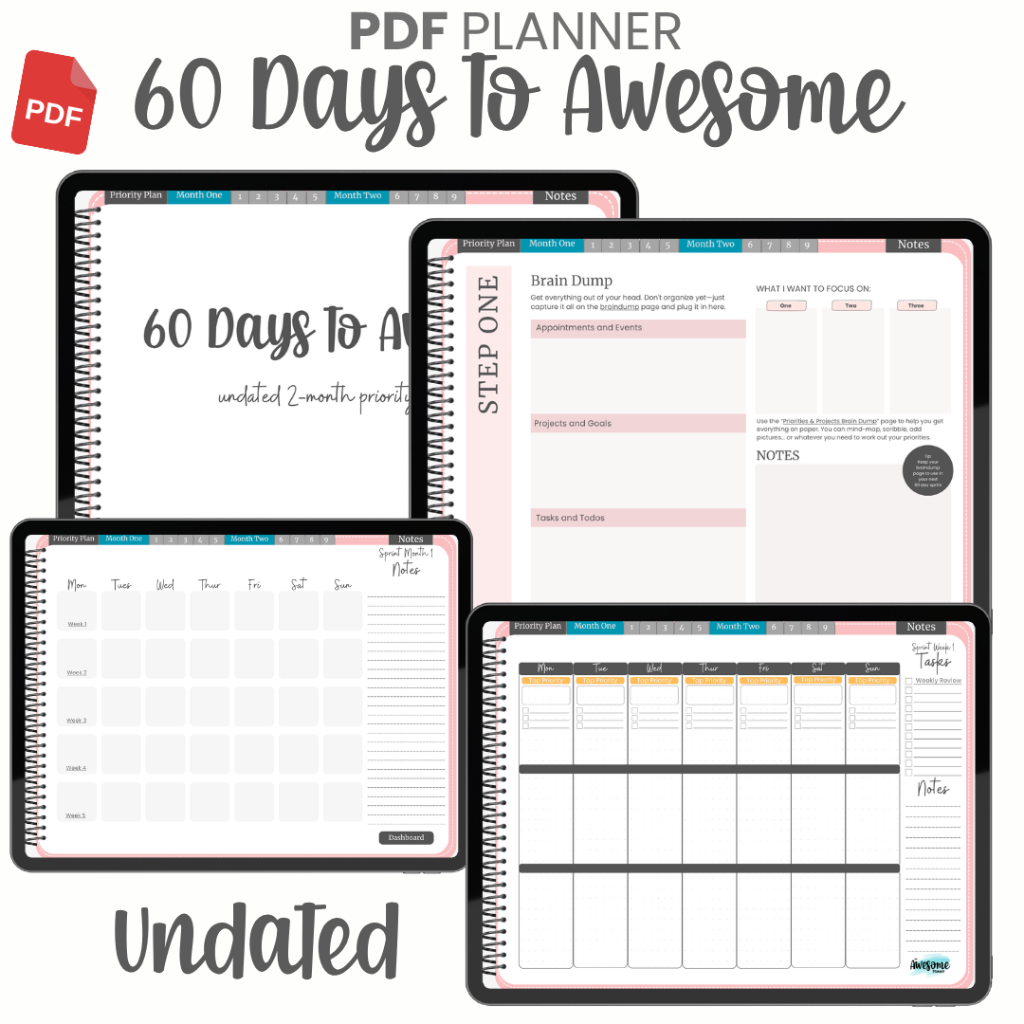
This is the counting. Nothing more. Before anything can be weighed, decided about, or changed, it has to be seen — all of it, in one place, at one time. Most of us have never done that. We know the load is heavy. We have never looked at it whole.
The List Is Only the Top Layer
When we think about what we carry, we usually think about tasks. The errands, the appointments, the chores, the jobs with a finish line. That is the visible layer, and it is real — but it is only the surface of the load, and often not even the heaviest part of it.
Underneath the task list sits a different kind of weight.
Responsibilities. The ongoing roles that never finish. Being the parent, the employee, the spouse, the daughter or son, the neighbor, the one who keeps a household running. A task ends; a responsibility does not. It is there on the good days and the bad ones, in every season, whether or not it appears on any given day's list. Responsibilities are the part of the load we carry simply by being who we are to the people around us.
Commitments made to other people. The promises, large and small. Some were spoken out loud — I will be there, I will handle that, count on me. Others were never said at all; they were simply understood, and they bind just as tightly. Every commitment is a piece of our future already spoken for, and most of us have made far more of them than we could list if asked.
Recurring obligations that renew themselves. The commitments that do not need to be re-chosen because they never ask. They arrive on their own schedule, month after month, year after year, and we meet them out of habit so complete we have stopped experiencing them as something we are carrying at all. Nobody decided, this year, to carry them. They simply continued — and continuation, repeated long enough, starts to look like permanence.
Projects, goals, and wants. The things we are carrying toward something. The improvement half-finished, the plan half-formed, the thing we mean to get to when life settles down. These weigh less obviously than duties do, but they weigh. An unfinished project is not neutral; it sits in the back of the mind, asking its quiet question — when? — every time we pass it by.
Expectations. Ours, and other people's. The standards we believe we are supposed to meet, the roles we believe we are supposed to fill, the version of ourselves we measure the real one against. Some expectations were handed to us so early we cannot remember choosing them. Some we chose gladly and have since outgrown. Either way, they are carried. A person can be doing nothing at all and still be tired from the effort of falling short of who they expected to be.
Unfinished business. The open loops: the decision unmade, the conversation unhad, the thing broken and not yet dealt with, the matter we keep meaning to settle. Open loops do not rest. Each one holds a small piece of attention, and together they form a background hum that follows us through days that otherwise look manageable.
That is the load beneath the list. Tasks are what we do. Everything above is what we are carrying while we do it.

The Load Nobody Sees
Some of the load is invisible for a simpler reason: it happens inside one person's head, and it is often carried for other people.
Remembering. Anticipating. Worrying. Keeping track. Knowing who needs what, and when, and what happens if it is forgotten. Noticing what is running low, what is coming due, what someone mentioned once, three weeks ago, that will matter next Tuesday.
This is real carrying. It consumes attention and energy exactly the way visible work does. But because it produces no finished task anyone can point to, it is rarely counted — not by the people who benefit from it, and often not by the person doing it, either. At the end of a day spent largely on this kind of carrying, a person can look back, find almost nothing to show for it, and conclude they did nothing. They did a great deal. It just never took a shape anyone could see.
If you have ever been exhausted by a day that looked, on paper, almost empty, this is likely part of the explanation. The paper was not lying about the tasks. It was simply missing most of the load.
The Load That Stopped Looking Like a Load
There is one more kind of invisible weight, and it may be the most common of all: the obligations we have carried so long that they no longer register as carried things.
Anything borne long enough fades into the background of a life. It stops looking like a choice, or even like an item. It reads as just how things are — the weather of a household, the shape of a week, the way it has always been done. We do not carry it the way we carry a new commitment, conscious of its weight. We carry it the way we carry our own name.
This is not a small point. The long-carried things are often the largest single part of a load, precisely because they have had the most years to grow and the fewest moments of being questioned. And they cannot be examined at all while they are still disguised as scenery. Naming one of them — this is a thing I carry; it has weight; it is not simply the air — is not a judgment about it. It may turn out to be worth every bit of its weight. But it cannot be known to be worth it until it is seen as a thing carried, rather than as the natural order of the world.
Seeing, here, is the whole job. Some of what we carry has been invisible because it lives in our heads, and some because it has been there so long we stopped seeing it at all. Both kinds count. Both kinds weigh what they weigh whether we look at them or not.

Name It. Don't Judge It.
There is a discipline to this kind of seeing, and it is a simple one: name what you carry, and do not judge it while you are naming it.
The moment we start evaluating as we go, the seeing stops being honest. We begin, without noticing, to edit. We skip the things we are embarrassed to be carrying. We skip the things we think we should not mind carrying — the small duties that feel too petty to name, the obligations attached to people we love, where admitting the weight feels like a complaint against them. We skip the things that seem too large and tangled to say out loud. And the picture that results is tidier than the truth, which means it is not the truth.
Judgment has its place, and it is coming. There are honest questions to ask about everything on this list — what it costs, what it is worth, what should change. But those questions belong to later chapters, and they can only be asked well about a load that has first been seen whole. A thing left off the list cannot be weighed. It can only be carried.
So the rule is just this: it counts because it is carried. Not because it is heavy enough, or legitimate enough, or because someone else would agree it belongs there. If it takes your time, your energy, your attention, your money, or your support, then it is part of the load, and it goes in the picture.
Expect the full picture to be surprising. For most people, it is. Not because anything on it is shocking by itself, but because of the total: the sheer number of things one ordinary life turns out to be holding at once, most of them reasonable, many of them good, all of them together more than the sentence we usually tell ourselves. Work, the kids, the house. The real answer was always longer.
Seeing Is Not Solving
A word of reassurance, because it is needed: seeing the whole load is not the same as being asked to fix it, and nothing in this article asks that of anyone.
In fact, seeing it whole tends to do something unexpected. It quiets a particular kind of self-blame. A person who has only ever seen their load in fragments — one hard day here, one dropped ball there — can easily conclude that the trouble is their own inadequacy. A person looking at the complete picture, all of it in one place, sees something different: a quantity. A total that would strain anyone carrying it. The math stops being a theory at that point. It becomes something you can point to.
That is enough for now. The load, seen whole, is the honest starting point every later step depends on.
And once the whole load is visible, a new question naturally follows it — not yet what to do about any of it. First, something more basic: what does each of these things actually cost? Everything has a cost. Now that we can finally see everything, we can start asking what it takes to carry it.